

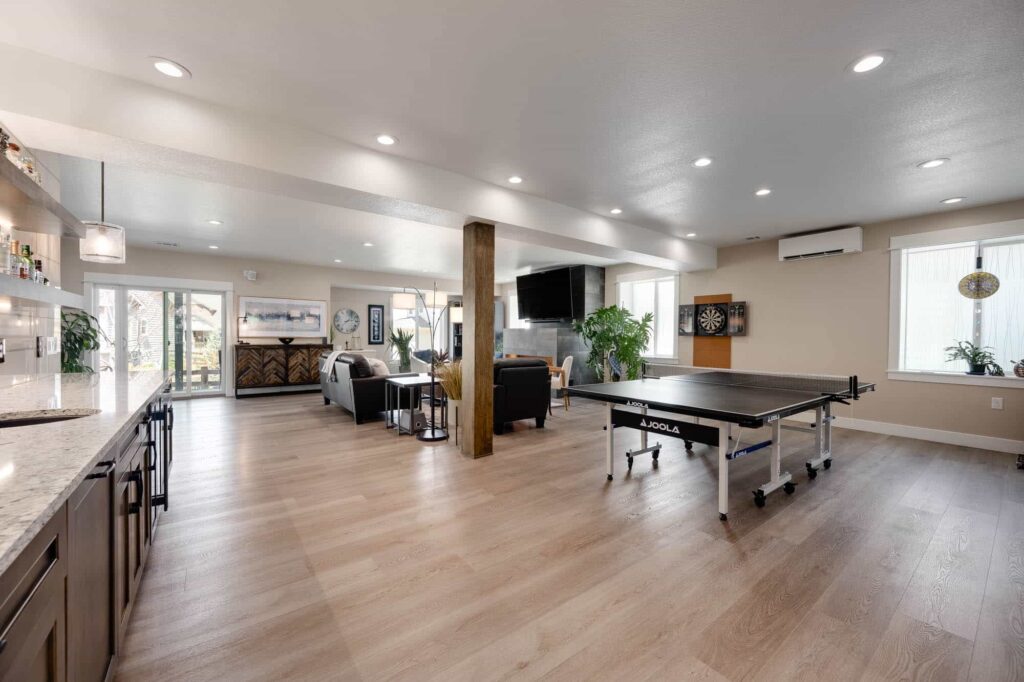
If your basement feels more like storage overflow than living space, you’re not alone. But with thoughtful design and smart space planning, your basement can become one of the most functional — and valuable — areas in your home. Whether you’re envisioning a home gym, wet bar, rec room, or theater room, the key to successful basement finishing starts with creating a layout that flows.
Here’s how to do just that — with a focus on comfort, practicality, and return on investment.
1. Start with a Purpose and a Plan
Every great basement starts with a clear goal. Before thinking about finishes or furniture, determine how the space will be used.
Questions to ask yourself:
- Do you need an extra living room for entertaining?
- Would a private guest suite come in handy?
- Are you dreaming of a home theater, gym, or custom workspace?
Once you’ve prioritized the features, assess any limitations. Fixed elements like HVAC systems, plumbing lines, and support beams will influence layout choices. Place utility areas (like laundry or storage) in low-light corners and reserve windows or brighter zones for spaces where you’ll spend more time.
Tip: Sketch your layout on graph paper or use an app to visualize how everything fits together. This can help you identify traffic patterns and ensure there’s enough clearance for furniture and door swings.
2. Create Open Zones with Natural Flow
Basements often lack natural light and have lower ceilings, so an open concept design goes a long way. Instead of building unnecessary walls, define areas using furniture, lighting, and finishes.
Design strategies that work:
- Use area rugs and sectionals to visually separate living zones.
- Add sliding or glass doors to create flexible spaces that feel open yet private.
- Maintain consistent flooring throughout to help the space feel larger and more connected.
- Incorporate dropped ceilings only where needed — avoid shrinking the space unnecessarily.
A well-designed basement should feel like a natural extension of the rest of your home, not an afterthought. Think flow, not fragmentation.
3. Maximize Storage Without Sacrificing Space
Smart storage is essential in a functional basement. Built-ins and custom cabinetry can provide tons of hidden storage while enhancing aesthetics.
Here are a few clever ideas:
- Use the space under the stairs for a reading nook, wine storage, or compact powder room.
- Install floor-to-ceiling shelves or storage towers along unused walls.
- Choose multifunctional furniture, like ottomans with built-in storage or a murphy bed in a guest space.
- Include built-in entertainment centers that hide wires and clutter.
The goal is to keep your space open and uncluttered — especially in basements where square footage is at a premium.
4. Brighten Up with Smart Lighting
Because basements typically have limited natural light, a layered lighting plan is essential.
A few key lighting tips:
- Install recessed LED ceiling lights as your general lighting base.
- Add task lighting in activity zones — under-cabinet strips in a wet bar, or reading lamps in a lounge area.
- Use accent lights like sconces to create warmth and depth.
- Mirrors can amplify both natural and artificial light — place them strategically across from windows or lamps.
- If your layout allows, enlarge windows or add egress windows to increase light and add value (plus meet code for bedrooms).
Lighting isn’t just about visibility — it’s about atmosphere and comfort, especially in a cozy rec room or guest suite.
5. Design for Flexibility and Long-Term Value
If you’re investing in a basement remodel, think beyond your current needs. Flexible design ensures the space adapts as your lifestyle evolves.
For example:
- A playroom today can become a teen hangout or media room tomorrow.
- A home gym can double as a guest space with the right furniture.
- A wet bar can be designed to convert into a kitchenette if needed.
Designing with flexibility in mind not only maximizes daily function — it also increases your home’s resale potential.
Let Discount Decor Help You Build the Perfect Basement
At Discount Decor, we specialize in designing and finishing basements that balance style, comfort, and practicality. Whether you’re looking to create a relaxing retreat, a dynamic entertainment space, or a full guest suite, our team in Loveland, CO is here to guide you from concept to completion.
Contact us today for a free consultation — and let’s turn your underused basement into a beautifully finished extension of your home.
FAQ: Functional Basement Layouts
1. How do I decide which areas go where in my basement layout?
Start by identifying structural limitations (like ductwork or support beams), and place utility zones in low-light or tucked-away areas. Save natural light for living zones like lounges or bedrooms.
2. Can I have multiple zones in an open basement layout?
Yes. Use rugs, lighting changes, and furniture groupings to create distinct zones — like a gym, entertainment area, or workspace — without adding walls.
3. What’s the best type of flooring for a finished basement?
Luxury vinyl plank (LVP) is a popular choice for its water resistance and durability. Engineered hardwood and tile are also viable depending on your insulation and moisture control.
4. How can I make my basement feel brighter?
Incorporate layered lighting, mirrors, glass doors, and if possible, larger or additional windows. Bright paint colors and light-toned flooring also help.
5. Is it worth hiring a professional for layout planning?
Absolutely. A contractor experienced in basement remodeling can help avoid costly design mistakes, ensure code compliance, and create a layout that truly works for your lifestyle.