

Balancing Durability, Function, and Design in Colorado Homes
When planning a kitchen or bathroom remodel, it’s easy to fall in love with the look of a countertop. But the most beautiful surface won’t serve you well if it can’t keep up with your lifestyle. Whether you’re constantly cooking, have a busy household, or want something low-maintenance, the right countertop material should do more than just look good—it should work for you.
1. Evaluate Your Day-to-Day Kitchen Habits
Before browsing styles or finishes, take a realistic look at how your household uses the kitchen or bath.
Do you cook every day? If you’re placing hot pans directly on the counter or doing a lot of chopping, you’ll want something heat- and scratch-resistant like granite or porcelain.
Do you host frequently? Entertaining calls for counters that resist stains from wine, citrus, and sauces—quartz or sealed granite are strong contenders.
Do you need a kid-friendly surface? Look for materials that are non-porous and don’t require sealing, like quartz or solid surface counters.
Do you want something stress-free? Busy homeowners often benefit from low-maintenance materials that don’t need frequent upkeep—again, quartz leads the pack.
Do you love the natural look—even with imperfections? If patina and character matter more than perfection, marble or butcher block could be a great fit.
2. Understand the Pros and Cons of Popular Materials
Each material offers unique benefits and trade-offs. Here’s a breakdown based on performance:
| Material | Durability | Maintenance | Heat Resistance | Best For |
|---|---|---|---|---|
| Quartz | Excellent – resists chips and scratches | Very low – no sealing required | Low – protect from direct heat | Busy families, low-maintenance households |
| Granite | Highly durable and scratch-resistant | Moderate – needs sealing | High – naturally heat-resistant | Frequent cooks, resale value |
| Marble | Softer, prone to etching and stains | High – requires sealing | High – stays cool for baking | Elegant designs, low-traffic use |
| Butcher Block | Prone to dents, water damage | High – needs regular oiling | Low – use trivets or pads | Farmhouse kitchens, prep areas |
| Laminate | Susceptible to deep scratches | Very low – easy to clean | Very low – heat can damage it | Budget projects, rentals, light use |
No matter which countertop material you choose, protecting it from excess moisture plays a major role in preserving both appearance and longevity over time. Small leaks around sinks, dishwashers, or plumbing connections can quietly seep beneath surfaces and cabinetry, leading to swelling, staining, or hidden structural damage before homeowners even notice a problem.
Materials with higher maintenance needs, particularly butcher block and marble, tend to show the effects of prolonged moisture exposure much faster than more resilient surfaces. When water issues do arise, working with specialists experienced in Water Damage Restoration Salt Lake City can help prevent minor problems from turning into costly repairs later on. Fast drying, proper inspection, and careful restoration techniques are especially important in kitchens where cabinetry, flooring, and countertops are closely connected.
Even durable materials such as granite or quartz benefit from a dry, well-maintained environment, since protecting the surrounding structure is just as important as protecting the surface itself. A well-cared-for kitchen not only maintains its visual appeal but also continues functioning reliably through years of daily use, spills, heat, and constant activity.
3. Consider Colorado’s Climate
Living in Loveland means dealing with temperature swings, dry winters, and occasional humidity from summer storms. Materials that handle these conditions best include:
Quartz and granite, which stay stable year-round.
Butcher block may expand or contract slightly depending on humidity levels, so it’s best in well-controlled environments.
Laminate is cost-effective but may show wear faster in high-use kitchens.
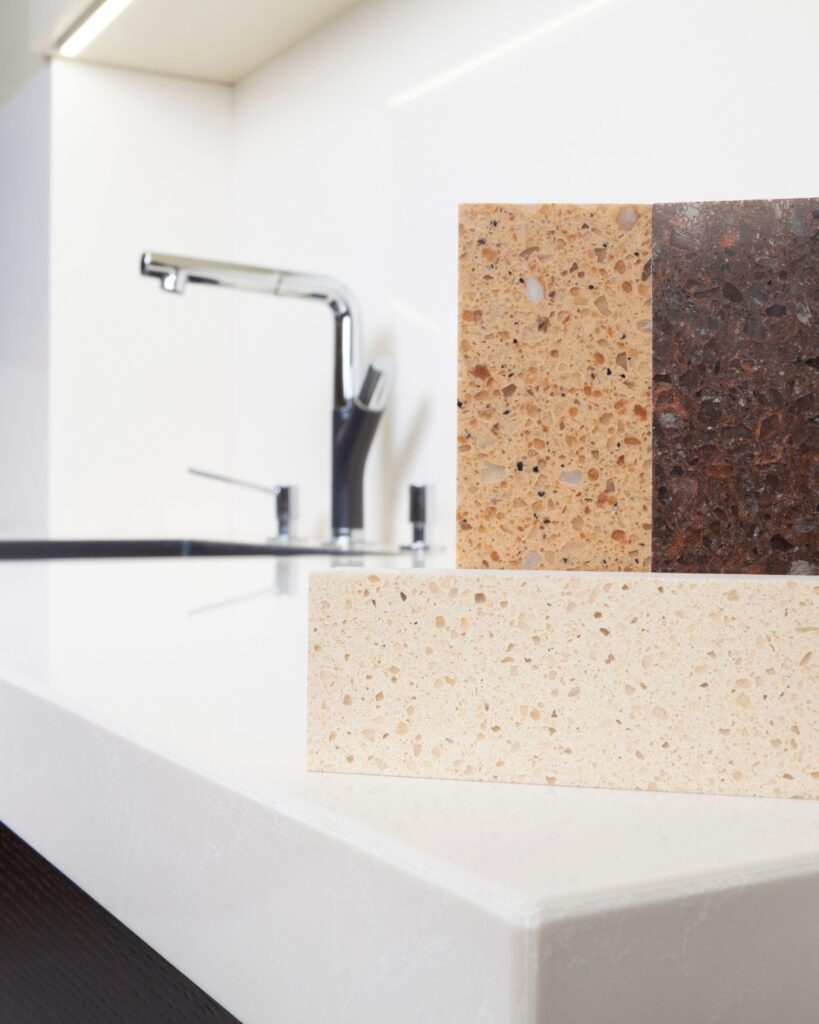
4. Test Samples in Your Space
Lighting and usage can impact how your countertops look and perform over time. Request samples and test them in your actual kitchen:
Place hot dishes.
Spill acidic liquids like lemon juice or red wine.
See how easily they wipe clean after sticky cooking sessions.
These tests can help you rule out materials that won’t hold up in real life—even if they check every design box.
Final Thoughts
Choosing countertops isn’t just about choosing a pretty surface. It’s about finding a functional, lasting solution that matches how you live. From holiday baking marathons to everyday meal prep chaos, your counters need to support your habits—not just your Pinterest board.
At Discount Decor, we specialize in helping homeowners throughout Loveland and Northern Colorado find the right countertop materials for their lifestyle and budget. Whether you’re planning a full kitchen remodel or a simple upgrade, our team will guide you through every step—from consultation and design to expert installation.
Ready to Find the Right Countertop for Your Home?
Contact Discount Decor today for a free consultation and discover countertop options that fit your life, your home, and your style. Let’s build something beautiful and functional together.
FAQ: Choosing the Right Countertop for Your Lifestyle
1. What’s the most low-maintenance countertop material?
Quartz is generally the best low-maintenance option. It’s non-porous, doesn’t require sealing, and resists most stains and scratches.
2. Are butcher block countertops a good idea in Colorado’s climate?
Butcher block can be used successfully, but it requires regular oiling and may expand or contract slightly with humidity changes. It’s best for specific zones like prep areas—not full kitchen counters.
3. Is granite still a good choice for modern kitchens?
Absolutely. Granite remains popular for its durability, heat resistance, and natural beauty. With a variety of colors and finishes, it can suit both traditional and modern designs.
4. How do I protect countertops from heat damage?
Use trivets or hot pads under pans and baking sheets—especially on quartz, laminate, or butcher block surfaces, which can be damaged by high heat.
5. Can I mix countertop materials in one kitchen?
Yes! Many homeowners use one surface (like butcher block) on an island and another (like quartz) around the perimeter to balance function and design.